Hands-Free Angling: The Best Fishing Backpacks for 2026.
If you're still lugging a plastic tackle box by a single handle down a mile-long pier or a rocky trail, you're doing it the hard way. A dedicated fishing backpack organizes your tackle trays, holds your rods, and keeps your pliers at the ready — all while saving your back. We've tested the top packs for durability, zipper strength (the #1 failure point in salt air), and performance under a full load of heavy lead weights.
Why Ditch the Traditional Tackle Box?
Head-to-head across every category that matters for the serious shore angler. The results are pretty clear.
Tackle Box
LosesOne-handed carry strains your wrist and shoulder after 20 minutes. Impossible to balance on slippery rocks, steep trails, or while wading. You need one free hand minimum — a tackle box takes both your attention and your grip.
Mobility
We pack into a spot on the Oregon coast that requires a 40-minute trail hike and a steep rock scramble. With a backpack, it's a hike. With a tackle box, it's a nightmare. The remote spots are where the fish live — get a backpack and go find them.
Fishing Backpack
WinsBoth hands completely free. Hike into spots where no one else bothers to go because it's "too far." Stabilize yourself on slippery rocks without worrying about dropping $200 of tackle. Weight distributes across both shoulders and your hip belt.
Adam Smith's Top Fishing Backpacks
Real field tests. Real trails. Real salt air. No fluff.
Tackle Command Center — Large Fishing Backpack
The Full Day Trip Workhorse
When you need to bring everything — multiple rod setups, a full tray complement, lunch, rain gear, and a first aid kit — a full-size fishing backpack is the only answer. The best models in this class hold four to six 3600-size Plano trays in dedicated padded sleeves, feature a separate insulated cooler section for live bait or lunch, and include a padded laptop-sleeve-style pocket perfect for a tackle organization layer.
The feature that decides whether a full-size pack is walkable is the hip belt, not the volume. A loaded tackle pack sits at the heavy end of what a day pack ever carries, and a belt transfers that off your shoulders onto your hips. If a 35L-plus pack has only a sternum strap, expect to feel it after the first mile.
Full-day shore fishing · Beach sessions · National Park hikes · Multi-species trips
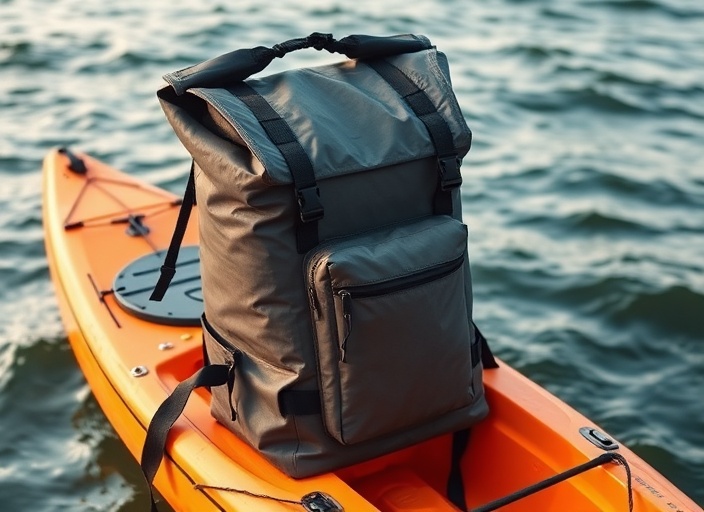
Dry-Zone Roll-Top Waterproof Fishing Pack
For Kayak Anglers and Surf Fishers Who WILL Get Wet
If you're launching from a kayak, fishing off a surf-swept jetty, or wading into the surf, waterproofing isn't a luxury — it's mandatory. Roll-top closure systems with TPU-welded seams create a 100% waterproof environment for your tackle and electronics. Some models also include exterior mesh wet-storage pockets for wet gear to stay separate from dry tackle.
Read the closure, not the marketing word. A roll-top needs three or four folds before the buckle to actually seal, and "water resistant" on a zippered pack means splash only. If the pack goes in a kayak, the roll-top with welded seams is the design that survives a swamping; a coated zip is not the same product.
Kayak fishing · Surf fishing · Jet skiing · Wade fishing in rain
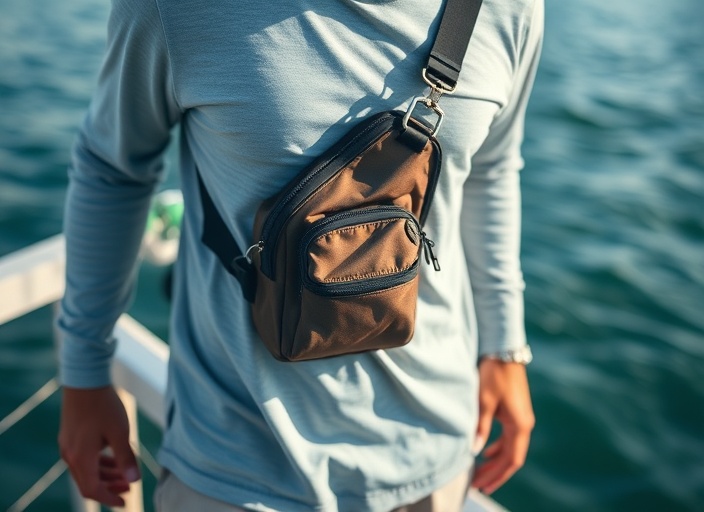
Fishing Sling Bag — Single-Strap Quick Access
Swing to Your Chest Without Taking It Off
The sling bag is the street-smart choice for urban pier fishing, quick kayak sessions, or when you just don't need to haul six trays of tackle. The single-strap design lets you swing the bag from your back to your chest in one motion — no removing, no setting down, no fumbling. Ideal for finesse fishermen who run a tight lure selection and move spots frequently.
The sling exists for one reason: you can rotate it to your chest and open it without taking it off. That matters when you are moving constantly and changing lures standing up — pier, jetty, bank walking. It is the wrong choice the moment you need more than one or two trays.
Urban pier fishing · Quick day trips · Finesse fishing · Ultralight travel
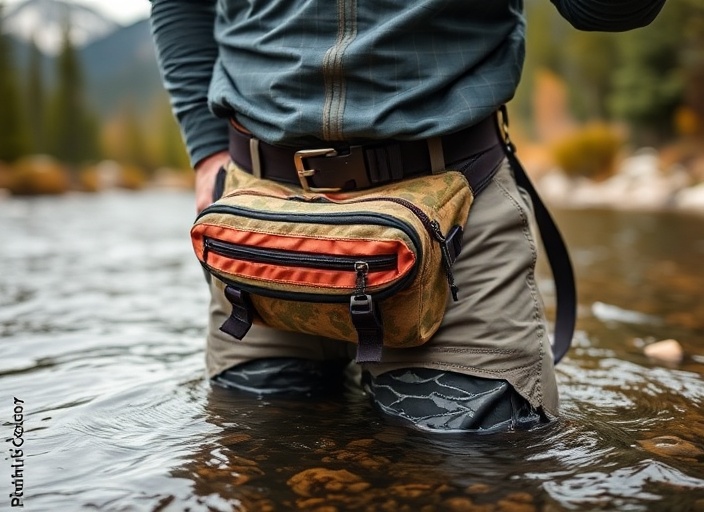
Fly Fishing Waist Pack & Wading Belt Combo
Maximum Mobility for Wade Fishing & Fly Anglers
When you're wading a trout stream or stalking flats fish in shallow water, a full backpack is too much and a sling bag hits the water on your bends. A waist pack rides above your wading belt, keeps your hands 100% free, and swings out of the way when you need to net a fish. Premium models are made from waterproof TPU material and hold one 3600 tray plus leader spools, floatant, and essential tools.
A waist pack sits above the waterline when a backpack does not, which is the practical argument for it while wading. The trade is capacity: one tray and tippet, and you are choosing your flies at the truck rather than on the water. Check the belt is wide enough not to dig once it is loaded.
Fly fishing · Wade fishing · Colorado mountain streams · Bonefish flats
Pack Style Capacity & Feature Guide
Every pack style side-by-side. Pick the right carrying system for how you actually fish.
| Pack Style | Tray Capacity | Volume | Best For | Water Resist. | Rod Holder | Hip Belt | Rating |
|---|---|---|---|---|---|---|---|
Full Backpack | 4–6 x 3600 | 35–50L | Long Day / Remote Trips | High | |||
Sling Bag | 1–2 x 3600 | 10–15L | Urban Pier / Quick Trips | Medium | |||
Waist Pack | 1 x 3600 | 5–8L | Fly / Wade Fishing | Low–High* | |||
Roll-Top Dry Bag | 2–3 x 3600 | 20–30L | Kayak / Surf / Rain | IPX6 / Full |
3600 Tray Compatibility
The standard 3600-size Plano tray fits most fishing backpacks. Always verify dimensions before buying specialty trays. Dimensions: 14" × 9" × 1.75".
Zipper Quality Matters Most
In salt air, cheap zippers corrode and fail first. Look for YKK or equivalent waterproof coil zippers. Rinse with fresh water after every saltwater trip.
Hip Belt = Game Changer
A padded hip belt transfers 60–70% of pack weight to your hips (your strongest muscles). Non-negotiable for any pack you'll carry more than 1 mile.
What's In My Bag?
A sensible pack load-out by fishing scenario. Click your trip type to see how to pack it.
Full Shore Day Load-Out
Heaviest tray in the middle of the pack, closest to your spine. Lighter gear at the top. Never put lead sinkers at the very bottom — it drops your center of gravity too low.
How to Pack for a Long Day
Adam Smith's universal packing rules — applies to every pack type.
Heaviest tackle trays go in the middle, closest to your spine. Never at the top or bottom.
In saltwater — CA or FL — rinse zippers with fresh water after EVERY trip. Salt crystals kill zippers faster than rocks.
Use clear-lid 3600 trays. You can see lure categories through the pack window without opening each tray.
Clip pliers to the shoulder strap D-ring. You should reach your pliers in under 2 seconds — not dig for them.
Sunscreen, lip balm, and your phone always go in the same outer pocket. Build the muscle memory.
Carry a spare zipper pull kit. A $3 fix that saves a $150 pack. Takes 2 minutes to install in the field.
Gear Up the Rest of Your Setup
You've got the pack — now fill it with the best gear.
Show us your organized bag!
Tag us on Instagram →Pin your gear setup!
Find us on Pinterest →Full Gear Hub
Every rod, reel, line, and tackle review on FishingGears.org.
Saltwater Hooks Guide
Stock your new pack's saltwater tray with the right corrosion-resistant hooks.
Best Crappie Reels
Pair your ultralight sling bag with the perfect 1000-series panfish reel.
Best Fishing Kayaks
Pair your roll-top waterproof pack with the right kayak for day trips.