Independent Fishing Gear Reviews & USA Fishing Guides
FishingGears.org
Marine Guide2026 UpdatedCaptain's Pick

Navigating the Choppy Stuff: Best Aluminum Fishing Boats for Rough Water.

Aluminum is not a calm-water compromise. Hull geometry decides how a boat behaves in chop, and a deep-V aluminum hull handles the Great Lakes or coastal chop better than many fiberglass rigs. We're looking at the builds that keep you dry and, more importantly, keep you safe when the weather turns south.

Adam Smith|Last Updated: April 2026|Great Lakes · Chesapeake Bay · Columbia River
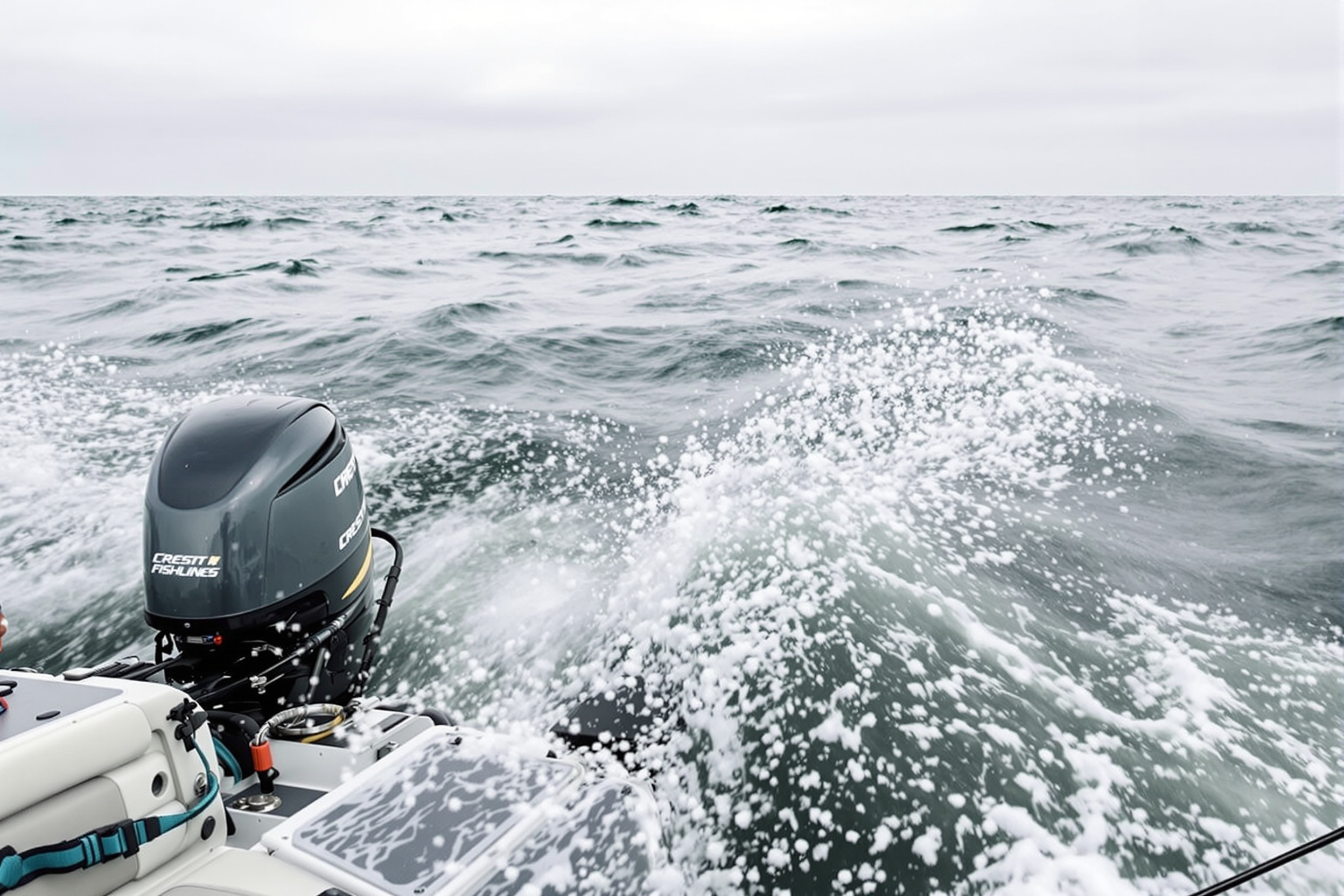
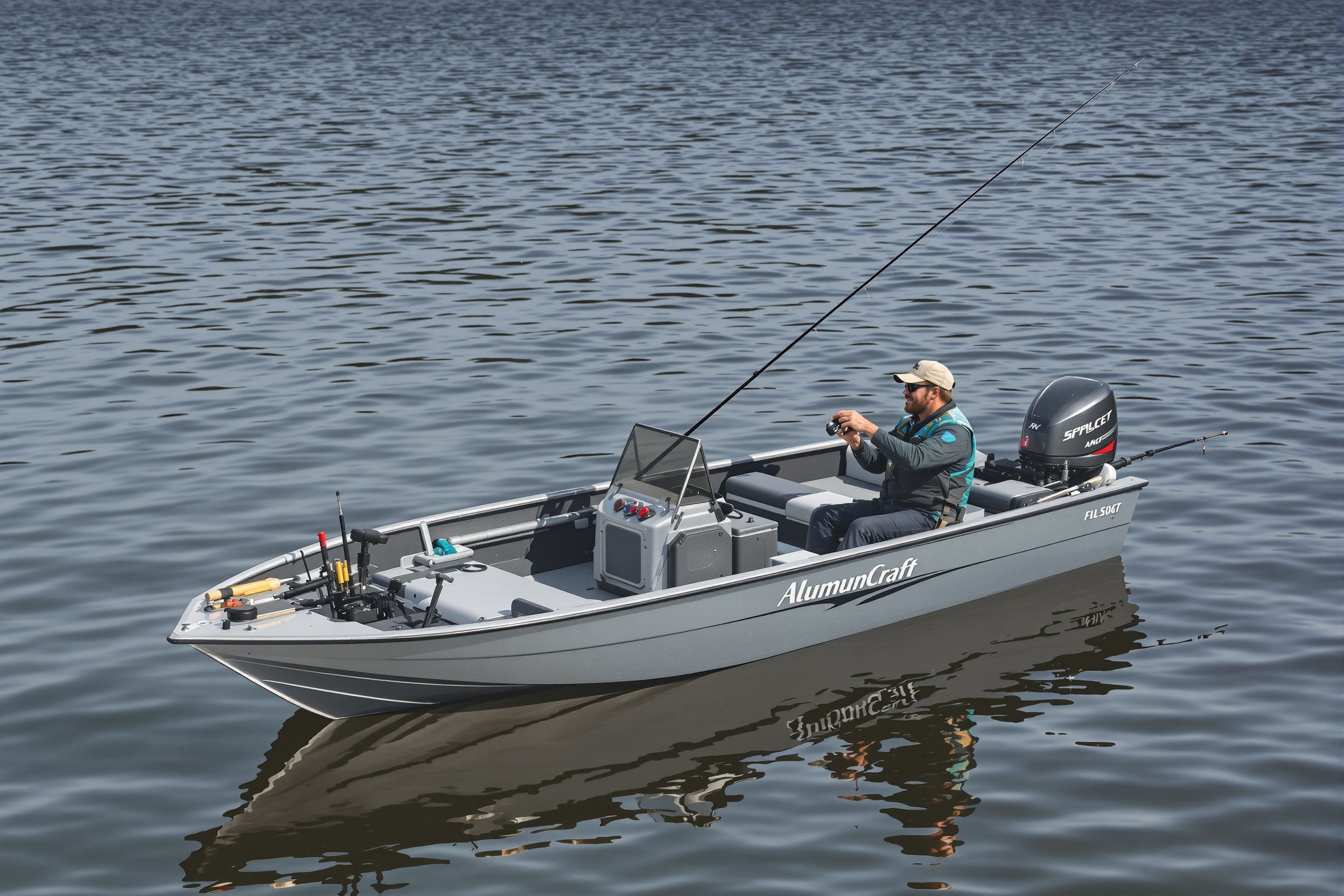
Aluminum fishing boat with Deep-V hull cutting through rough water waves
Rough Water Rating
Deep-V: 5/5
Engineering Breakdown

What Makes a Boat "Rough Water Ready"?

There are four factors that separate an aluminum boat you can trust in a squall from one you're paddling back to shore after a bad decision. Here's how to read the specs before you buy.

Read This First

Towing Weight vs Boat Weight

2,740 lb
Lund 1875 rig, as towed

The number that decides whether your vehicle can tow a boat is not the boat's weight. Lund lists the 1875 Impact XS Sport at 1,520 lb for the boat alone, and 2,740 lb as the boat, motor and trailer together — the figure that actually hangs off your hitch. Builders publish both; people quote the wrong one constantly.

If your vehicle is rated to tow 3,500 lb, a 2,740 lb rig leaves roughly 760 lb of headroom, and that headroom is where fuel, batteries, gear, a full livewell and passengers go. Add the tongue weight check too — typically 10 to 15 percent of the trailer's loaded weight, which has to sit inside your hitch rating as well. An 18-foot aluminum deep-V on a single-axle trailer is generally workable behind a 3,500 lb-rated vehicle; it is not generous.

River Running

Welded vs Riveted

Welded
For rock and current

A welded seam is continuous metal; a riveted seam is two sheets clamped through a hole. For a boat that will contact rock, the welded hull is the one to want — there is no fastener to loosen and no hole to work at. Every boat on this page is welded, and that is not an accident: the whole premium 18-foot deep-V class went that way.

Riveted hulls are not junk. They are lighter for the same thickness, cheaper to build, and a loose rivet is a repair a competent shop can do in an afternoon, whereas a cracked weld is a specialist job. The honest split: riveted for calm water and budget, welded for rock, current and repeated grounding. If you run shallow rocky rivers, welded plus a thick bow plate matters far more than any single gauge figure.

Most Critical

Deep-V Hull

20–24°
Ideal Deadrise

The deadrise angle of a Deep-V hull — typically 20–24 degrees — acts like a knife cutting through oncoming waves rather than slapping over them. This means less pounding for the crew, less stress on the hull welds, and more control at speed in heavy chop. In rough water, hull geometry matters more than hull material.

On Lake Erie — notorious for 4–6 ft rollers in a summer squall — a 20-degree deep-V handles conditions that would send a flat-bottom boat back to the dock in minutes. The trade-off: you lose some interior room and fuel efficiency compared to a flat hull.

Safety Factor

Freeboard Height

28"
Recommended Minimum

Freeboard is the distance between the waterline and the top edge of the hull (the gunwale). In rough water, you want maximum freeboard — high sides to keep spray out, waves from washing in, and passengers from going overboard. Most rough-water-ready aluminum boats run 24–30 inches of freeboard.

On the Chesapeake Bay, where wind-driven 3-footers can appear in 20 minutes, a boat with 28+ inches of freeboard keeps you dry and gives passengers a handhold. Low freeboard is fine for a calm river — it's dangerous on open water.

Durability

Welded vs. Riveted Construction

Welded
Our Pick

Welded aluminum construction is the clear winner for rough water. Riveted hulls flex slightly with each wave impact — which is fine for calm lakes — but in sustained rough water, those rivets work loose over time, eventually weeping water into the bilge. Welds are permanent, rigid, and don't move.

That said, a properly maintained riveted hull is still a solid boat. The key word is 'maintained.' Inspect every rivet on a riveted hull before a season on rough water, and carry marine sealant on board. On a welded boat, you're looking for corrosion at the welds — easiest spot to miss and most likely to fail.

Build Quality

Hull Gauge (Metal Thickness)

0.080"
Lund 1875 Impact XS Bottom

Hull thickness is quoted in thousandths of an inch, and a single number tells you less than the internet suggests. Lund's 2024 spec sheet for the 1875 Impact XS Sport — a boat built squarely for big open water — lists a 0.080" bottom. What carries the load there is not raw thickness but construction: a twin-plated bottom from bow to amidship and a double-plated bow at 0.160".

So do not shop on bottom gauge alone. Read whether the bottom is single or twin plated, how thick the bow plating is, how the ribs are spaced, and whether the boat carries level flotation compliance. A 0.080" twin-plated bottom with tight rib spacing is a different structure from a 0.100" single-plate hull, and the spec sheet will tell you which you are looking at if you read past the first line.

The Big Question

Aluminum vs. Fiberglass for Rough Water

Fiberglass has one real advantage: it absorbs wave impact better and gives a slightly softer ride. But for most USA anglers fishing rocky shores, shallow rivers, or dragging onto gravel beaches, aluminum wins every time.

Rocky shoreline contactAluminum
Wave pounding comfortFiberglass
Weight & fuel efficiencyAluminum
Repair costAluminum
Shallow water useAluminum
Welded aluminum boat hull construction detail

Welded hull construction — no rivets to work loose in rough water vibration.

Side-by-Side

Hull Type Comparison

Jon Boat, Mod-V, Deep-V, Semi-V — what's the real difference on a rough day? This table gives you the honest answer.

Jon Boat (Flat Bottom)

Flat-water only
Rough Water
Stability

Best for: Calm ponds, shallow rivers, marshes

Mod-V (Modified V)

Good all-rounder
Rough Water
Stability

Best for: Rivers, protected bays, calm to moderate lakes

Top Pick

Deep-V (18–22° Deadrise)

Best for rough water
Rough Water
Stability

Best for: Great Lakes, Chesapeake Bay, Columbia River, coastal bays — any rough water

Semi-V (15–17° Deadrise)

Decent compromise
Rough Water
Stability

Best for: Lakes, protected inlets, moderate chop

Adam Smith — Captain's Note

The Rough Water rating above assumes the same driver skill level. An experienced operator in a Mod-V can outperform a novice in a Deep-V. Hull design gives you the tool — technique determines the outcome. Always quarter the waves at a 45° angle, never take big chop head-on or directly from the stern.

Before You Launch

Rough Water Safety Checklist

The US Coast Guard estimates that 75% of boating fatalities involve vessels under 21 feet — the exact size most aluminum fishing boats fall into. Run this checklist before every rough-water outing. Click to check off items.

Pre-Launch Checklist0/12 Ready

12 items remaining before you're rough-water ready.

Angler wearing self-inflating life vest on aluminum fishing boat in rough water

Essential Safety Gear

Self-Inflating Life Vests

Essential for rough water movement — auto-inflates on submersion.

View on Amazon
High-Quality Boat Fenders

Protect your hull when the dock gets jumpy in rough conditions.

View on Amazon
Waterproof Dry Bags for Electronics

Because a 'dry ride' is never 100% guaranteed — protect your phone and GPS.

View on Amazon
Three Boats Worth Comparing

18-Foot Aluminum Deep-Vs for Rough Water

Three long-running 18-foot deep-V models from the three builders that dominate this class. Figures below are the builder's published numbers where we could source them; where a spec sheet was not available the card says so rather than guessing. Always confirm against the current model year before you buy — hull thicknesses and weights change between years.

Lund 1875 Impact XS Sport aluminum fishing boat rough water
Full Specs Published
Deep-V

Lund 1875 Impact XS Sport

Boat Weight
1,520 lb (boat only)
Towing Weight
2,740 lb rig
Construction
Welded, twin-plated bottom
Hull Thickness
0.080" bottom · 0.160" bow
Load Capacity
1,800 lb max
Best For

Great Lakes, large reservoirs, coastal bays

Builder's Spec Sheet

Boats in this class sell through dealers, not online retailers.

Crestliner 1850 Fish Hawk WT aluminum fishing boat rough water
Deep-V

Crestliner 1850 Fish Hawk WT

Boat Weight
See builder spec sheet
Towing Weight
See builder spec sheet
Construction
Welded aluminum
Hull Thickness
See builder spec sheet
Load Capacity
See builder spec sheet
Best For

Columbia River, Chesapeake Bay, Great Lakes

Builder's Spec Sheet

Boats in this class sell through dealers, not online retailers.

Alumacraft Competitor 185 Sport aluminum fishing boat rough water
Deep-V

Alumacraft Competitor 185 Sport

Boat Weight
See builder spec sheet
Towing Weight
See builder spec sheet
Construction
Welded aluminum
Hull Thickness
See builder spec sheet
Load Capacity
See builder spec sheet
Best For

Large lakes, protected coastal bays, rivers

Builder's Spec Sheet

Boats in this class sell through dealers, not online retailers.

Adam Smith — Captain's Notes

Rough Water Survival Tips by Location

These tips come from actual time on the water in three of the most challenging fishing environments in the USA. They are not from a manual.

Great Lakes (Lake Erie & Lake Michigan)

The Great Lakes are unpredictable — and we mean that literally. A flat-calm morning on Lake Erie can become 4-foot rollers by noon. We never leave the dock on the Great Lakes without checking the NOAA 24-hour marine forecast AND the wind forecast on a second app. If sustained winds exceed 15 mph, we wait. An aluminum Deep-V handles it, but not every passenger does.

Captain's Note — Adam Smith

Quartering the waves at 45° is the single most important rough-water skill. Never take Lake Erie rollers on the beam (side) — that's how boats capsize.

Chesapeake Bay

The Chesapeake's shallow draft and wind-driven chop make it brutal for flat-bottom boats. The Bay can go from 1-foot ripples to 3-foot whitecaps in under an hour when a front comes through. We run a 20° deep-V with 28" freeboard minimum on the Chesapeake and have a strict 'no departure after 2pm in summer' rule — afternoon thunderstorm season is serious.

Captain's Note — Adam Smith

The Chesapeake is well-marked but currents can push you off anchor faster than expected. Always set two anchors in a 'V' configuration when you're fishing in open Bay conditions.

Columbia River (Oregon/Washington)

The Columbia River Gorge creates venturi wind effects that accelerate winds to 35–50 mph without warning. Aluminum boats take a beating on the Columbia when the gorge winds fire up. The key here isn't just the hull — it's knowing your escape routes to sheltered coves before you're a mile downriver with no way to turn back upwind.

Captain's Note — Adam Smith

Rocky Columbia River banks mean aluminum is essential — fiberglass on those basalt shores is a repair bill waiting to happen. We keep .100" minimum gauge on any boat we recommend for the Columbia.

Universal Rule

The "Quarter the Waves" Technique

It's not just the boat — it's the driver. On the Great Lakes or the Columbia River, remember: taking waves at a 45-degree angle prevents nose-diving and rolling. An aluminum boat is light, which makes it fast, but you'll feel the bounce more than in a heavy glass boat.

45° QuarteringControlled entry, manageable spray, safest approach
Head-On (0°)Maximum pounding, risk of nose-diving in large chop
Parallel (90°)Rolling risk — most dangerous position in large waves
Stern-On (180°)Pooping risk (wave over transom) — dangerous in steep seas
Aluminum boat quartering waves at 45 degree angle for safe rough water navigation

Have a Rough Water Story?

Share your boat pics, close calls, and trophy catches with the FishingGears community on Facebook.

Join the Community
You Might Also Need

Complete Your On-Water Setup

Reviewed by Adam Smith · Last Updated: April 2026

Every boat here is specified from the builder’s own data — hull gauge and deadrise, beam, transom rating, published capacity and dry weight — alongside US Coast Guard capacity-plate requirements. Rough-water behaviour is explained through hull geometry and owner-reported patterns, not a sea trial this site did not run. Every Amazon link uses tag orgfg-20 which supports this research at no extra cost to you.

Great Lakes·Chesapeake Bay·Columbia River·Affiliate Disclosure
Trending in April
🎣 Bass Season

The bass are biting in Florida right now.

Spring bass spawn is on. Trick worms, creature baits, and bed-fishing tactics are working nationwide.